Fifth wheel hitches
Which fifth wheel hitch should you buy?
A fifth wheel hitch is a jawed head that clamps around a trailer's kingpin and sits in the bed, over or ahead of the rear axle, rather than hanging off the back bumper. That single difference in geometry is why fifth wheels do not need weight distribution hitches or sway control: the load presses down where the truck is strongest instead of levering the steer axle up.
All of that pin weight comes straight out of your truck's payload. The conventional band is 15 to 25 percent of the loaded trailer weight, which on a 12,000 lb fifth wheel is 1,800 to 3,000 lb before the hitch hardware itself is even counted. Payload, not the tow rating in a brochure, is the number that runs out first on most half ton and three quarter ton trucks pulling a fifth wheel, so work that sum before you fall in love with a hitch.
Fifth wheel hitches mount two different ways, and the mounting method matters as much as the GTW rating when you are picking one. A rail-mounted hitch bolts to a set of base rails installed under the bed, which fit almost any truck but add an install step. A puck-mounted hitch drops straight into threaded holes some trucks come with from the factory, with no rails and no drilling at all.
On this page
Beginner: a real hitch, rails sold separately
The cheapest genuine fifth wheel hitch from a maker with a real service and parts path. Budget for rails on top of this one if your bed does not have them.
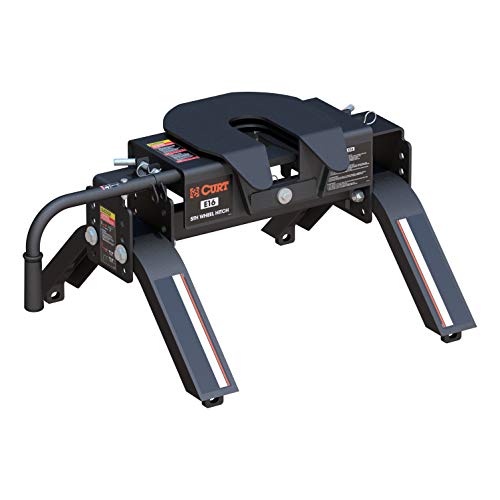
CURT E16 Fifth Wheel Hitch, 16,000 lb
$405.99Sixteen thousand pounds of GTW rating at the lowest price in the catalog, which covers a great many half ton and three quarter ton fifth wheels once you are shopping by weight rather than by badge.
Best for: A first fifth wheel hitch on a tight budget, on a truck that already has rails installed.
Check price on AmazonIntermediate: less chuck for a modest step up
The value pick here buys ride quality, not just a bigger number on the rating sticker.
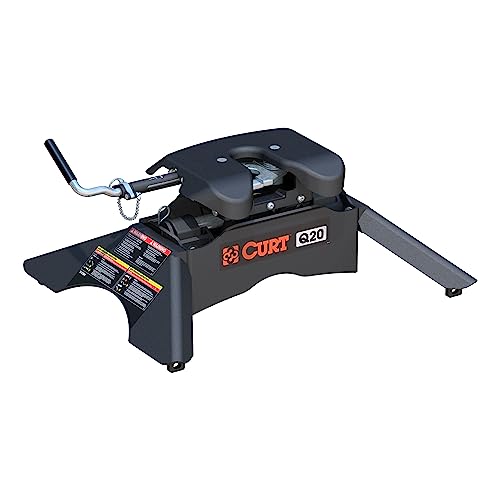
CURT Q20 Fifth Wheel Hitch, 20,000 lb
$599.99A dual jaw head that wraps more of the kingpin than a single jaw design, which is the difference you actually feel as less fore-aft chuck every time the throttle goes on or off, at 20,000 lb GTW.
Best for: A mid to large fifth wheel where ride quality matters as much as the rating.
Check price on AmazonExpert: a clear bed between trips

B&W Companion Fifth Wheel Hitch
$1,099.00Mounts into a gooseneck ball hole instead of bed rails, so the bed is completely clear when the hitch is out, and a cam action latch wraps the kingpin rather than gripping it with jaws, which is the design that eliminates the worst of the chuck.
Best for: A truck that has to be a working truck between fifth wheel trips.
Check price on AmazonWho should not buy this tier: A truck without a gooseneck ball already installed underneath. The Companion needs a separate Turnoverball gooseneck mount bolted in first, which is real money and a real install on top of the hitch price itself, so it is not the answer if the lowest total cost is what you are chasing.
How much pin weight will this trailer put on your truck?
Pin weight, and what lands on the truck
Rule of thumbpin weight = trailer weight x 15 to 25 percent Example at 12,000 lb: 15% = 1,800 lb 20% = 2,400 lb 25% = 3,000 lb on the truck = pin weight + hitch hardware (roughly 100 to 130 lb)
The band is towing convention, not a published standard. Your own trailer certification label states its actual weights, and that figure governs.
This is the sum that decides whether the hitch you like fits the truck you have. A fifth wheel's pin weight band, 15 to 25 percent, is far higher than a bumper pull's 10 to 15 percent, because the load sits over the axle instead of hanging behind it. The trade is that every pound of it is payload, permanently, with no weight distribution hitch able to move any of it elsewhere.
At 20 percent, a 12,000 lb fifth wheel puts 2,400 lb of pin weight on the truck before the hitch itself is counted.
Rule of thumb Widely taught towing convention rather than a published specification. It is a good starting point and it is not a rating.
| Loaded trailer weight | Pin weight at 20 percent | Plus hitch hardware |
|---|---|---|
| 9,000 lb | 1,800 lb | ~1,920 lb |
| 11,000 lb | 2,200 lb | ~2,320 lb |
| 13,000 lb | 2,600 lb | ~2,720 lb |
| 16,000 lb | 3,200 lb | ~3,320 lb |
Run your own numbers with the fifth wheel pin weight calculator linked below rather than trusting a table built for a generic trailer.
Rails, or does it drop into pucks?
The CURT A16 Fifth Wheel Hitch with Rails, 16,000 lb ships with rails included; the CURT E16 Fifth Wheel Hitch, 16,000 lb and CURT Q20 Fifth Wheel Hitch, 20,000 lb need rails bought separately, such as CURT's universal base rails.
Published standard A published, traceable figure: a standards body, a federal regulation or a manufacturer specification states it.
| Hitch | GTW rating | Mounting | Rails included |
|---|---|---|---|
| CURT E16 Fifth Wheel Hitch, 16,000 lb | 16,000 lb | Rail mounted | No |
| CURT Q20 Fifth Wheel Hitch, 20,000 lb | 20,000 lb | Rail mounted | No |
| CURT A16 Fifth Wheel Hitch with Rails, 16,000 lb | 16,000 lb | Rail mounted | Yes |
| B&W Companion Fifth Wheel Hitch | 20,000 lb | Gooseneck ball mounted | No, needs a gooseneck mount |
A hitch without rails is not an installable purchase on a bed that has none. Price the rails and the truck-specific brackets before you compare hitch prices alone.
How we chose
We did not test this hardware in person and we never claim to. Picks are researched from manufacturer specification sheets, published towing standards, and the recurring themes in verified owner reviews. Every pick is matched to a real gross trailer weight rating, a real tongue or pin weight rating, a real receiver size or a real load index rather than to a price bracket, and it is placed in the tier where its published capability actually belongs. We rejected the unbranded flood that dominates the search results in several of these categories, because a weight distribution hitch, a brake controller, a trailer tire and a set of safety chains are all parts whose failure puts a loose trailer on a public road. Where a figure is towing convention rather than a published standard we label it that way, and where a manufacturer does not publish a figure we leave it out instead of estimating it.
Frequently asked questions
What is the difference between a rail-mounted and a puck-mounted fifth wheel hitch?
Rail-mounted hitches bolt to a set of base rails installed under the bed, which fit nearly any truck but add an install step and a parts cost if the bed does not already have rails. Puck-mounted hitches drop into threaded holes some trucks come with from the factory, Ford and GM among them, with no rails, no brackets and no drilling at all.
How much pin weight will my fifth wheel actually put on the truck?
Roughly 15 to 25 percent of the loaded trailer weight, with 20 percent a common working figure. A 12,000 lb fifth wheel therefore puts about 2,400 lb into the bed once the hitch hardware itself is added, and every pound of it comes out of the payload printed on your driver door jamb sticker, not out of the tow rating.
Do I need weight distribution or sway control on a fifth wheel?
No. Weight distribution and sway control exist to manage a trailer hanging behind the tow vehicle's rear axle, and a fifth wheel's pin sits over that axle instead. The fifth wheel equivalent problem is chuck, the fore-aft jolt on throttle changes, which a cam action hitch head or a cushioned pin box addresses instead.
Can I put a fifth wheel hitch on a truck with no rails or pucks?
Yes, but budget for the rails and the truck-specific installation brackets as a separate line item. The CURT A16 avoids that extra order by including rails in the box. A puck-equipped truck skips rails entirely if you buy a hitch built for that puck pattern instead of a rail-mounted one.
What is chuck and does the hitch choice actually change it?
Chuck is the fore-aft jolt felt in the cab on every acceleration and deceleration, caused by slack between the kingpin and the hitch jaw. A dual jaw or cam action design that wraps more of the kingpin, like the CURT Q20 or the B&W Companion, measurably reduces it compared with a simpler single jaw hitch such as the E16.
Is a higher GTW rating always the better choice?
No. Buy to your trailer's actual loaded weight with reasonable headroom, not to the largest number available. A hitch rated well beyond what you need costs more and is not lighter or easier to use for it, and your truck's payload and the receiver or rail rating underneath the hitch are the limits that actually bind first on most rigs.
Free download
Get the complete tow rig setups emailed to you
Both ladders, conventional travel trailer and fifth wheel, at beginner, intermediate and expert budgets, every item priced and linked with a running total, plus a printable pre-trip weighing worksheet you can fill in at the scale.
One email with the setups. No sequence, no sharing your address, unsubscribe any time.
Researched, not professional advice. This page is compiled from published standards, manufacturer towing guides and product specifications, and owner-review consensus, not hands-on testing. Figures described as a rule of thumb are towing convention rather than published standards, and they are labelled that way wherever they appear. Nothing here overrides your own ratings. Work your payload sum before your tow rating, because payload is the limit that actually binds on most half ton trucks and nearly every SUV. Load a conventional trailer to 10 to 15 percent tongue weight and a fifth wheel to 15 to 25 percent pin weight, and never lighter: a tail heavy trailer is what starts sway. Weigh the rig loaded rather than trusting a brochure dry weight. A weight distribution hitch and a set of air bags both restore ride height and control, and neither one raises a single rating. Trailer brakes are required by state law above a threshold that varies by state, and a breakaway battery that has quietly gone flat is the normal condition of most trailers on the road.