Weights and capacities
How much can you actually load in the trailer?
Dry weight, properly unloaded vehicle weight, is the trailer as it left the factory. It is the number in the brochure and it is the number nobody ever tows at. It does not include dealer-installed options, and that is where buyers get caught: a second air conditioner, a solar package, an awning upgrade and a generator prep can take several hundred pounds out of the capacity the brochure advertised.
The figure that matters is the cargo carrying capacity label on the trailer itself, and it is the authority. What this page gives you is the arithmetic behind it, so you can see where the capacity goes before you buy a trailer rather than after.
Work out what is left to pack
1,459 lb left to pack. The label on your own trailer is the authority.
| Figure | Value |
|---|---|
| Gap between GVWR and dry weight | 2,000 lb |
| Fresh water and heater | 417 lb |
| Propane | 74 lb |
| Batteries | 50 lb |
| Cargo carrying capacity | 1,459 lb |
Shown with the example figures above. Change any field to run your own numbers.
The working
Published standardCCC = GVWR - UVW - fresh water - propane - batteries water = (fresh gallons + water heater gallons) x 8.34 lb propane = cylinders x about 37 lb for a full 20 lb bottle battery = about 50 lb for a group 24 lead acid
The definition and the arithmetic are standard. Every input is a figure off your own trailer. A published, traceable figure: a standards body, a federal regulation or a manufacturer specification states it.
Weighing and levelling gear
A cargo capacity figure is only as good as the weights behind it. A scale turns the brochure number into your number.

Sherline LM 1000 Trailer Tongue Weight Scale, 1,000 lb
$189.90Sherline is the scale the towing community actually uses, and a 1,000 lb capacity covers most travel trailers. Hydraulic, with no batteries to be dead when you need it.
Best for: A trailer whose tongue weight is under 1,000 lb.
Check price on Amazon
Sherline LM 2000 Trailer Tongue Weight Scale, 2,000 lb
$189.90Double the capacity for the same money as the LM 1000, which makes it the sensible default unless you are certain your tongue weight is low.
Best for: Most travel trailers, with headroom for a heavier one later.
Check price on Amazon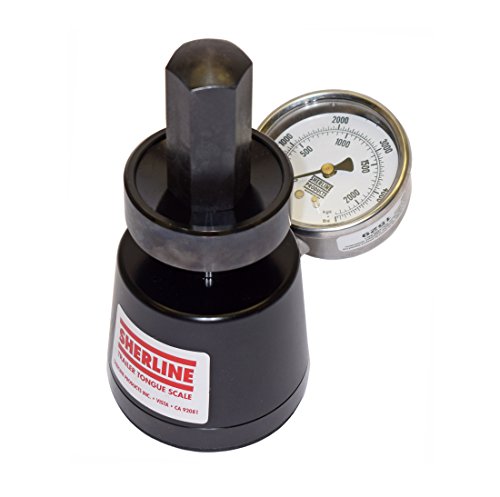
Sherline LM-5000 Trailer Tongue Weight Scale, 5,000 lb
$189.90Five thousand pounds, which is what it takes to weigh a fifth wheel pin rather than a bumper pull tongue.
Best for: Weighing fifth wheel pin weight at home.
Check price on Amazon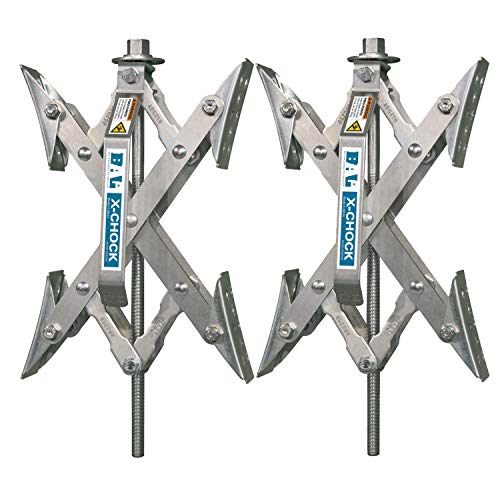
BAL X-Chock Tire Locking Chock, pair
$74.51Expands between the two tires of a tandem axle and locks them against each other, which removes the fore and aft rock that no ordinary chock touches. This is the single most noticeable comfort upgrade on a tandem axle trailer.
Check before buying: It only works on a tandem or triple axle. On a single axle trailer there is no second tire to wedge against and this is the wrong product.
Best for: Any tandem axle travel trailer or fifth wheel.
Check price on Amazon
Camco FasTen RV Leveling Blocks, 10 pack
$60.03Interlock on all four sides rather than two, so a stack can be built wider as well as taller. Made in the United States.
Best for: Building a wide, stable base under a heavy fifth wheel jack.
Check price on Amazon
Lynx Levelers, 22 pack with two caps
$59.99Double the blocks, which is what a tandem axle trailer on a badly sloped site actually needs once you are stacking under two tires and the jack.
Best for: A tandem axle trailer, or sites that are reliably bad.
Check price on AmazonEvery rating shown is the manufacturer's own published figure. The rating on the part you receive is what governs, and your own door jamb sticker governs everything above it.
Where the capacity actually goes
People assume cargo capacity is consumed by luggage. It is mostly consumed by things that live in the trailer permanently or arrive with it:
- Water, at 8.34 lb per gallon, plus another six gallons or so in the water heater
- Propane, about 74 lb for two full 20 lb cylinders including the steel bottles
- Batteries, 50 lb for one group 24, or about 30 lb for a 100 Ah lithium
- Dealer-installed options, which are not in the brochure dry weight at all
And it works the other way too: tongue weight is a percentage of the LOADED trailer weight, so every pound you add to the trailer adds roughly a tenth of a pound to your tow vehicle payload as well.
What the fresh water tank costs you
This is the most useful trade on the whole trailer, because it is the one you can change five minutes before you leave. Travelling with empty tanks and filling on arrival converts water weight straight back into cargo capacity.
Water weighs 8.34 lb per US gallon, so a 50 gallon tank is 417 lb and a 100 gallon tank is 834 lb.
Published standard A published, traceable figure: a standards body, a federal regulation or a manufacturer specification states it.
| Fresh tank size | Full weight |
|---|---|
| 20 gal | 167 lb |
| 26 gal | 217 lb |
| 30 gal | 250 lb |
| 36 gal | 300 lb |
| 40 gal | 334 lb |
| 44 gal | 367 lb |
| 50 gal | 417 lb |
| 60 gal | 500 lb |
| 66 gal | 550 lb |
| 80 gal | 667 lb |
| 100 gal | 834 lb |
Grey and black tanks matter on the way home rather than on the way out, and a full black tank weighs the same as a full fresh tank of the same size.
Propane: count the bottle, not just the gas
A "20 lb" cylinder is named for the propane it holds, not for what it weighs. The steel bottle is another 17 lb, and both of them sit on the A-frame ahead of the trailer axle where they land almost entirely on the tongue.
A full 20 lb propane cylinder weighs about 37 lb, because the empty steel bottle is around 17 lb.
Published standard A published, traceable figure: a standards body, a federal regulation or a manufacturer specification states it.
| Cylinder | Propane | Empty bottle | Full weight |
|---|---|---|---|
| 20 lb cylinder | 20 lb | 17 lb | 37 lb |
| 30 lb cylinder | 30 lb | 24 lb | 54 lb |
| 40 lb cylinder | 40 lb | 29 lb | 69 lb |
Frequently asked questions
What is the difference between dry weight and GVWR?
Dry weight, properly unloaded vehicle weight, is the trailer as it left the factory with no water, no propane, no batteries and no cargo. GVWR is the most the trailer may weigh loaded. The gap between them, minus the fluids and batteries, is your cargo carrying capacity. Dealer-installed options come out of that gap and are not in the brochure dry weight.
How much does a full water tank weigh?
Water weighs 8.34 lb per US gallon, so a 40 gallon tank is 334 lb, a 50 gallon tank is 417 lb and a 100 gallon tank is 834 lb. The water heater holds another six gallons or so. On many trailers the fresh tank alone accounts for most of the cargo carrying capacity.
Are dealer-installed options included in dry weight?
No, and this catches a lot of buyers. The brochure dry weight is the base trailer from the factory. A second air conditioner, a solar package, an upgraded awning, a generator prep and heavier furniture are all added afterwards and all come straight out of your cargo carrying capacity. The label applied to your specific trailer is the accurate figure.
Does cargo capacity affect my tongue weight?
Yes, in two ways. Total tongue weight is a percentage of the loaded trailer weight, so adding cargo adds tongue weight proportionally. More importantly, where you put the cargo changes the percentage: weight ahead of the trailer axle raises tongue weight and weight behind it lowers it, and a tail heavy load is what starts sway.
How much does a full propane cylinder weigh?
About 37 lb for a 20 lb cylinder, because the cylinder is named for the 20 lb of propane it holds and the empty steel bottle is another 17 lb. People count the propane and forget the bottle. Two full cylinders on the A-frame are about 74 lb, and almost all of it lands on the tongue.
What happens if I exceed the cargo carrying capacity?
You exceed the trailer GVWR, which means the axles, tires, brakes, springs and frame are all carrying more than they were specified for. Trailer tires are the usual first failure because they are already loaded close to their rating by design. It also puts you over weight legally, which matters a great deal in a crash investigation.
Free download
Get the complete tow rig setups emailed to you
Both ladders, conventional travel trailer and fifth wheel, at beginner, intermediate and expert budgets, every item priced and linked with a running total, plus a printable pre-trip weighing worksheet you can fill in at the scale.
One email with the setups. No sequence, no sharing your address, unsubscribe any time.
Researched, not professional advice. This page is compiled from published standards, manufacturer towing guides and product specifications, and owner-review consensus, not hands-on testing. Figures described as a rule of thumb are towing convention rather than published standards, and they are labelled that way wherever they appear. Nothing here overrides your own ratings. Work your payload sum before your tow rating, because payload is the limit that actually binds on most half ton trucks and nearly every SUV. Load a conventional trailer to 10 to 15 percent tongue weight and a fifth wheel to 15 to 25 percent pin weight, and never lighter: a tail heavy trailer is what starts sway. Weigh the rig loaded rather than trusting a brochure dry weight. A weight distribution hitch and a set of air bags both restore ride height and control, and neither one raises a single rating. Trailer brakes are required by state law above a threshold that varies by state, and a breakaway battery that has quietly gone flat is the normal condition of most trailers on the road.