Utility trailers
Bumper pull or gooseneck for a utility trailer: which coupling actually fits the load?
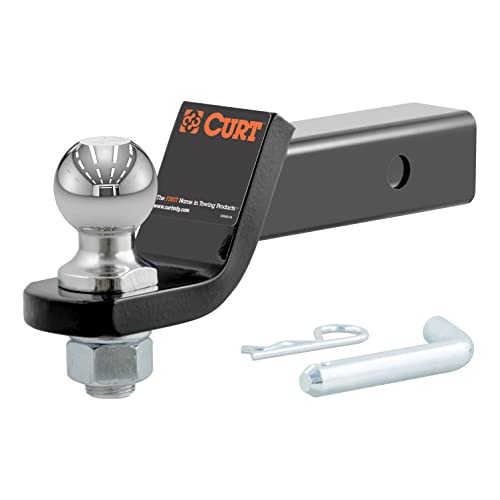
CURT 45036 Loaded Ball Mount, 7,500 lb, 2 inch drop
$31.99Couples at a receiver-mounted ball behind the bumper, with conventional tongue weight of 10 to 15 percent of trailer weight, and a weight distribution hitch can move that load forward onto the steer axle.
Best for: Somebody who does not own a torque wrench big enough for a ball nut.
Check price on Amazon
CURT 60639 OEM Puck Gooseneck Hitch Kit
$204.63Couples on a ball set into the bed floor directly over the rear axle, rated to 38,000 lb of gross trailer weight, with no distributing hardware because none of the connection weight needs redistributing off the axle it already sits over.
Best for: A puck equipped truck that needs a gooseneck rather than a fifth wheel.
Check price on AmazonMost utility trailers never need to ask this question, because most of them are light enough that a bumper pull receiver hitch is the obvious and correct answer. The question gets real once a utility trailer starts carrying serious equipment weight, a car, a skid steer, a stack of pallets, because that is the point where the coupling location itself starts to matter rather than just the ball size.
A loaded bumper pull ball mount couples behind the bumper through a receiver, the same connection every travel trailer and light utility trailer already uses. A gooseneck conversion kit that drops into a factory puck pattern couples on a ball set into the bed floor, directly over the rear axle, which is a mechanically different connection rather than a bigger version of the same one.
Neither coupling is inherently the correct choice. The right one depends on how much the trailer weighs loaded, how that weight is distributed, and whether the truck's receiver rating or its gooseneck prep is the actual limiting factor.
On this page
- What actually changes when the coupling moves from the bumper to the bed?
- Does an ordinary utility trailer ever actually need a gooseneck?
- What does moving the connection over the axle actually change about stability?
- Can a weight distribution hitch be used on a gooseneck utility trailer?
- What should actually decide the choice for a specific utility trailer?
What actually changes when the coupling moves from the bumper to the bed?
A bumper pull's connection weight runs 10 to 15 percent of trailer weight and can be partly redistributed by a weight distribution hitch, while a gooseneck's 15 to 25 percent connection weight has no such hardware and lands on the axle in full.
Rule of thumb Widely taught towing convention rather than a published specification. It is a good starting point and it is not a rating.
| Bumper pull | Gooseneck | |
|---|---|---|
| Coupling location | Ball behind the bumper, in a receiver | Ball in the bed floor, over the rear axle |
| Conventional connection weight | 10 to 15 percent of trailer weight | 15 to 25 percent of trailer weight |
| Can a weight distribution hitch help | Yes, moves load onto the steer and trailer axles | No, there is no distributing hardware for this coupling |
| Typical gross weight ceiling in this catalog | Up to 17,000 lb on a weight-distributing receiver | Up to 38,000 lb on a puck or rail mounted kit |
These are conventional percentage bands and catalog-typical ceilings, not a guarantee for any specific hitch. The rating stamped on your own receiver or gooseneck kit is the number that actually governs.
Does an ordinary utility trailer ever actually need a gooseneck?
Rarely, and that is worth saying plainly rather than implying every heavy load needs one. A garden trailer, a small landscape trailer, most single and tandem axle utility trailers under roughly 7,000 lb sit comfortably inside a Class III or IV bumper pull receiver's rating, and adding gooseneck hardware to one of those buys nothing. The gooseneck conversation starts once a utility trailer is genuinely a car hauler or an equipment trailer, the category where a rail mounted gooseneck ball rated at 25,000 lb or a universal gooseneck adapter rated to 24,000 lb gross and 6,000 lb of connection weight becomes the realistic hardware rather than an oversized receiver hitch trying to do a job it was not built for.
The trailer's own certification label is the starting point either way. A utility trailer built with a plain coupler for a 2 inch or 2-5/16 inch ball is a bumper pull trailer by construction, and no hitch swap on the truck side changes that.
What does moving the connection over the axle actually change about stability?
The physics is the same lever arm problem that governs sway on a bumper pull trailer, just relocated. A bumper pull's ball sits behind the bumper, so the trailer hangs off the back of the truck like a pendulum with a long arm, and a tail-heavy load lengthens that arm further. A gooseneck's ball sits over the rear axle itself, which shortens the effective arm dramatically and is the main reason a gooseneck-coupled load tends to feel steadier at the same gross weight.
That advantage is not automatic. It depends on the connection weight actually landing inside the conventional 15 to 25 percent band the same way a fifth wheel's pin weight does. A gooseneck load with too little weight on the ball still creates the same underlying instability the percentage convention exists to prevent, regardless of where the pivot sits.
Can a weight distribution hitch be used on a gooseneck utility trailer?
No. A weight distribution hitch's spring bars connect a receiver-mounted head to the trailer frame, a mechanism that has nothing to bolt to on a gooseneck coupling. A gooseneck's connection weight simply stays on the axle it lands on, the same way a fifth wheel's pin weight does, with no hardware that redistributes any of it elsewhere.
Air bags and helper springs are a separate topic and apply to either coupling type equally: a maintenance-free rubber suspension enhancement kit levels a squatting rear end under a heavy gooseneck load exactly as it would under a heavy bumper pull tongue weight, and it raises no capacity in either case. It changes ride height, not the payload sum underneath it.
What should actually decide the choice for a specific utility trailer?
Work it from the trailer up rather than from the hitch catalog down. Weigh the trailer loaded the way it is actually used, check the coupler stamped on its tongue, and check the truck's own receiver rating or gooseneck prep before assuming either coupling is available. A trailer built with a plain ball coupler cannot be converted to gooseneck without a new trailer frame or coupler, and a truck without factory gooseneck prep needs the full rail-and-bracket install rather than a simple ball swap.
Frequently asked questions
Is a gooseneck utility trailer always heavier duty than a bumper pull one?
Usually, but not by definition. Gooseneck hardware in this catalog tops out at 38,000 lb of gross trailer weight against roughly 17,000 lb for a weight-distributing bumper pull receiver, so gooseneck coupling is the practical choice once a utility trailer's loaded weight climbs into equipment or car-hauler territory. A light utility trailer gains nothing from a gooseneck conversion.
Can I put a gooseneck ball on a truck that already has a bumper pull receiver?
Yes, the two are independent systems and many trucks carry both. A receiver hitch stays in the bumper area regardless of what is added to the bed, and a gooseneck ball, whether a factory puck conversion or a rail mounted kit, mounts separately in the bed floor over the axle with no interference between the two.
Does a gooseneck utility trailer need sway control the way a bumper pull one does?
Less so, because the pivot sitting over the rear axle already shortens the lever arm that drives sway, the same advantage a fifth wheel has over a travel trailer. It is not immunity: a gooseneck load with connection weight below the conventional 15 percent floor can still develop instability regardless of where the pivot sits.
Why do car haulers and heavy equipment trailers favor gooseneck coupling?
Mechanical simplicity at high weight ratings and the stability advantage of a pivot over the axle rather than behind the bumper. A ball and coupler has fewer parts than the equivalent bumper pull hardware needed to reach the same gross weight rating, which is why gooseneck kits in this catalog reach 38,000 lb where bumper pull tops out around 17,000 lb.
Does the coupling type change how much truck payload the trailer uses?
The percentage convention changes, not the underlying rule. Both a bumper pull's tongue weight and a gooseneck's connection weight count fully against truck payload with no exemption either way. A gooseneck's higher conventional percentage, 15 to 25 percent against 10 to 15, means it typically takes a bigger bite out of the same truck's payload at a comparable trailer weight.
Can one utility trailer be converted from bumper pull to gooseneck?
Only by replacing the coupler and reinforcing the trailer's tongue structure for the different loading, which is a frame-level modification rather than a bolt-on swap. In practice, most owners who need gooseneck-level capacity buy a trailer built for it from the start rather than converting an existing bumper pull unit.
Free download
Get the complete tow rig setups emailed to you
Both ladders, conventional travel trailer and fifth wheel, at beginner, intermediate and expert budgets, every item priced and linked with a running total, plus a printable pre-trip weighing worksheet you can fill in at the scale.
One email with the setups. No sequence, no sharing your address, unsubscribe any time.
Researched, not professional advice. This page is compiled from published standards, manufacturer towing guides and product specifications, and owner-review consensus, not hands-on testing. Figures described as a rule of thumb are towing convention rather than published standards, and they are labelled that way wherever they appear. Nothing here overrides your own ratings. Work your payload sum before your tow rating, because payload is the limit that actually binds on most half ton trucks and nearly every SUV. Load a conventional trailer to 10 to 15 percent tongue weight and a fifth wheel to 15 to 25 percent pin weight, and never lighter: a tail heavy trailer is what starts sway. Weigh the rig loaded rather than trusting a brochure dry weight. A weight distribution hitch and a set of air bags both restore ride height and control, and neither one raises a single rating. Trailer brakes are required by state law above a threshold that varies by state, and a breakaway battery that has quietly gone flat is the normal condition of most trailers on the road.